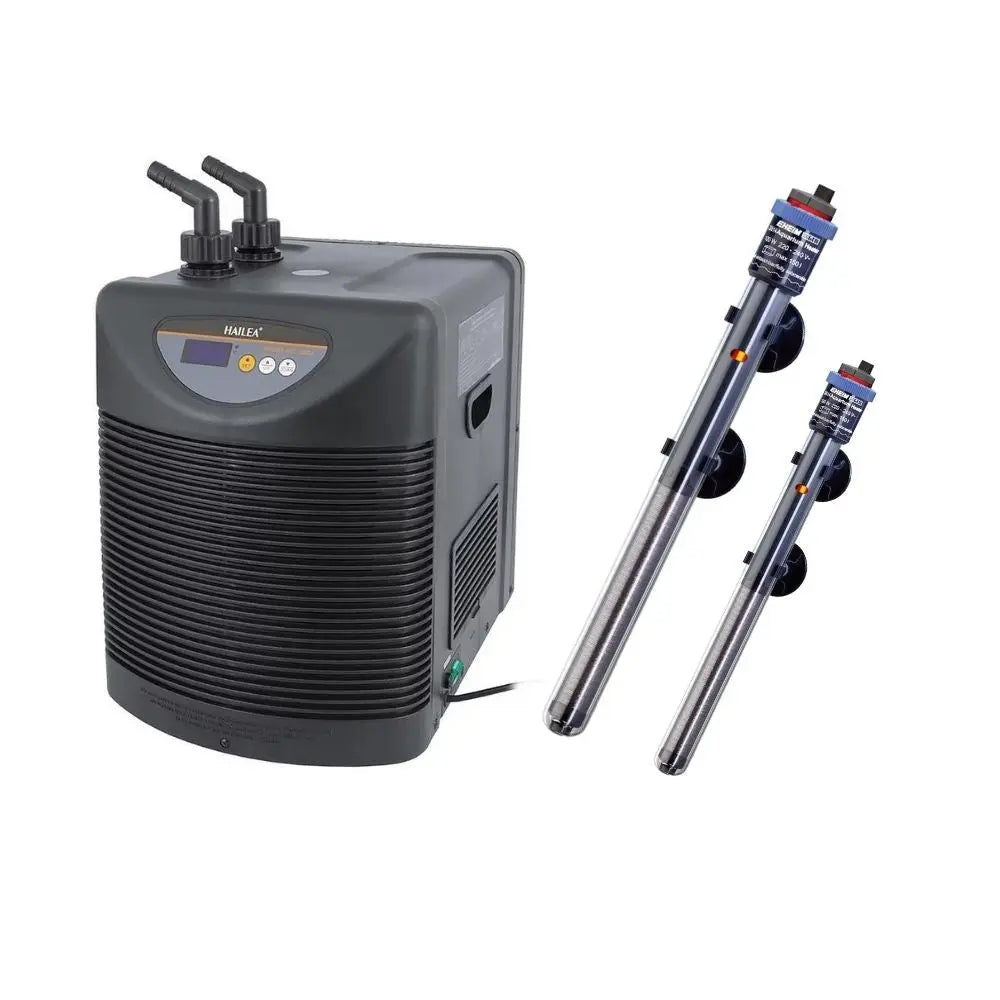
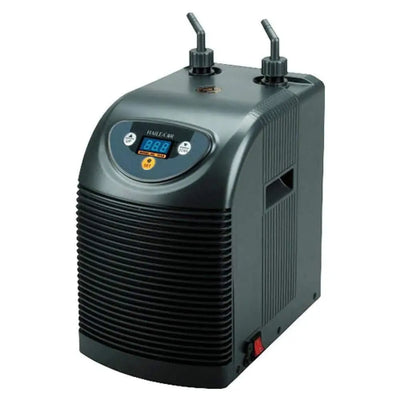
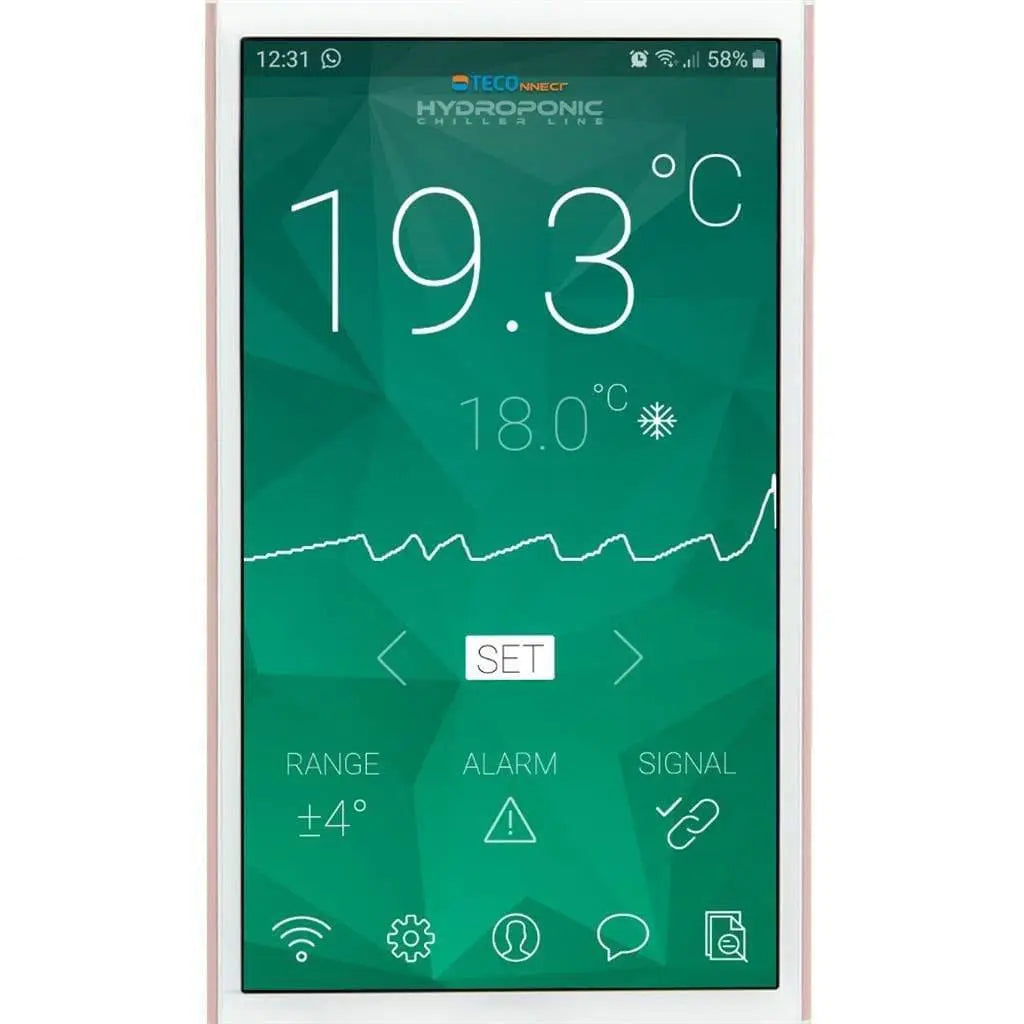
Reservoir temperature is the most under-rated number in hydroponics. Cold water slows root activity and stalls growth; warm water holds less dissolved oxygen and lets pythium take hold. The target is 18-20°C, and holding it is often the difference between a system that runs cleanly and one that repeatedly fails.
The oxygen problem
Water at 18°C holds meaningfully more dissolved oxygen than water at 26°C. Roots need that oxygen to take up nutrient, and the pathogens that cause root rot thrive in exactly the warm, low-oxygen conditions that follow. Once a reservoir is running above about 22°C you are fighting the chemistry, and no amount of beneficial bacteria fully compensates.
When you need a chiller
DWC and RDWC – roots are permanently submerged, so this is the highest risk system. See DWC systems.
Summer – a tank in a warm room tracks room temperature, and a grow room in July is warm.
Submersible pumps running constantly – the motor's waste heat goes straight into the solution.
Large sealed rooms where ambient temperature is high by design.
And when a heater
Garages, sheds, unheated lofts and outbuildings in winter. Below about 15°C, root activity slows sharply and plants sit still regardless of how good the feed is. An aquarium heater with a thermostat is inexpensive and solves it.
Cheaper things to try first
Before buying a chiller, the free options often work: move the tank off a concrete floor and out of the light, insulate or wrap it, use a larger volume of water (bigger tanks swing less), run the pump on a timer instead of continuously, and switch a submersible pump for an inline one so its heat stays out of the water. Frozen bottles work but are a chore and cause temperature swings.
We are a hydroponics shop in Croydon and we will usually try to talk you out of a chiller before selling you one – insulation and pump choice fix a lot of it. Discreet UK and European delivery, and excellent customer reviews on Trustpilot.