
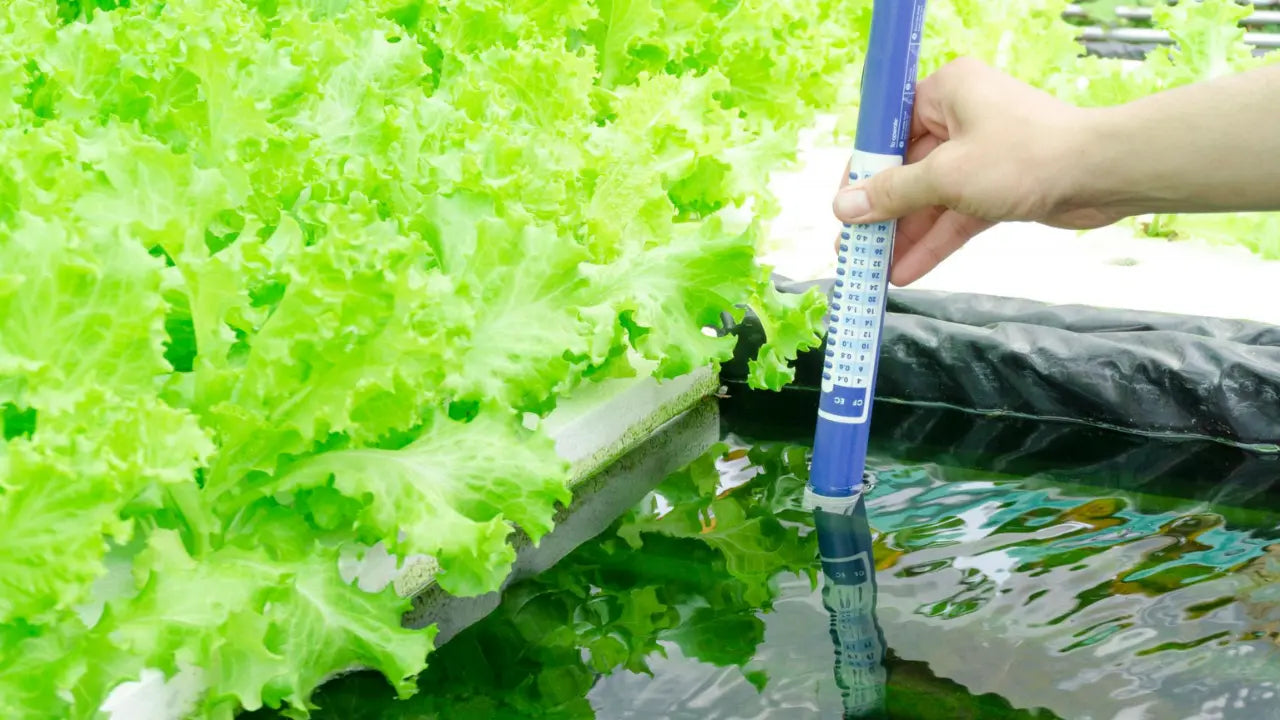
Let’s talk about something that can seriously make or break your grow—feed strength. Sounds a bit technical? Don’t stress. Whether you’re just getting started or looking to fine-tune your grow game, understanding how to manage your nutrient strength is one of the biggest keys to growing happy, thriving plants.
And guess what? It’s not as complicated as it sounds. That’s why we’ve put together this laid-back, straight-talking guide to help you nail it from day one.
What Is EC Anyway?

EC stands for Electrical Conductivity—a fancy way of measuring how much nutrient content is dissolved in your solution. The more minerals (aka plant food), the higher the conductivity. Pure water? No conductivity at all. Toss in some nutrients? Suddenly, it starts conducting electricity.
Basically, EC tells you how "strong" your nutrient mix is. It’s the gold standard for knowing whether your plants are getting just the right amount of food—or way too much (hello, tip burn), or not nearly enough (cue sad yellow leaves).
👉 Quick Tip: EC is often also referred to as cF (conductivity factor). They’re the same thing, just with different scales. EC 2.4 = cF 24. Easy maths.
👉A note on PPM: Some nutrient companies quote target strengths in PPM instead of EC. The problem with this is there are 2 PPM scales - 500 & 700, & many of the companies do not state which one they are using. We would recommend using EC as it is a clearer, easier to understand measure.
Why Feed Strength Matters (A Lot)
Imagine trying to grow a killer batch of tomatoes or lush green lettuce—but not knowing whether they’re starving or stuffed. That’s what happens when you ignore feed strength.
Watching your plants closely is great, but using EC readings gives you the real truth. It’s like getting a direct message from your plants about what they need.
-
EC has gone up? That means your plants are drinking water but leaving nutrients behind. They don’t need more food—probably less!
-
EC has dropped? Time to feed them more. They’re hungry and slurping up nutrients fast.
-
EC stays stable? Perfect. You’ve nailed the balance.
Reading the Signs Like a Pro

You don’t need a microscope—just your eyes and a meter.
-
Greener, fast-growing plants? You can safely up the feed a bit to support explosive growth.
-
Burnt leaf tips or yellowing leaves? Time to dilute your mix. Fast. You can add pH adjusted water to bring down your EC.
Over time, you’ll get good at spotting early signs of under or overfeeding, but your EC meter? That thing doesn’t lie. It’s your best friend in this game.
Know Your Crop
Not all plants are created equal when it comes to feed strength. Some like it light, others like it strong.
-
🥬 Lettuce & leafy greens prefer a mild EC of 0.8–1.2
-
🍅 Tomatoes, peppers & heavily fruiting plants thrive at a beefier EC of 2.0–3.0
Always do a bit of homework on your specific crop before mixing your nutrients.
Temperature Plays a Role Too
Did you know EC shifts with temperature? Yup. Every 1°C rise can bump your EC by about 2%. So, try to check your solution’s EC at the same point in your light cycle, to keep readings consistent.
Gear Up: What You Actually Need
Don’t worry, you don’t need a science lab—just a few key tools:
-
A reliable EC meter – like the Bluelab Truncheon or Aqua Master P110 Pro.
-
A good pH meter or tester
-
A measuring jug/cup, a nutrient syringe, and a big bucket
-
And if you’re not using a Bluelab Truncheon, calibration fluid (you’ll need to calibrate it manually)
Pro tip: Calibrate your meters regularly and make sure your calibration fluid is the same temp as your nutrient solution to avoid inaccurate readings.
Hard Water vs. Soft Water Nutrients: Quick Test
Not all tap water is the same. Here’s how to figure out which nutrients to use:
-
Fill a bucket with tap water and add a couple of drops of Ecothrive Neutralise, or let it sit for 24 hours (this gets rid of chlorine and brings it to room temp).
-
Measure the EC and pH:
-
pH 7.8+ and EC 0.8+? → Use hard water nutrients.
-
pH below 7.7 and EC below 0.7? → Go with soft water nutrients.
Mixing Feeds the Right Way
Before you pour anything in, check the EC of your base water. Most nutrient instructions assume you’re starting with pure water (EC 0), but that’s rarely the case with tap water. Adjust your target EC based on your starting number.
eg if your target EC is 1.2 & your tap water reads 0.4 before adding anything, your actual target EC will be 1.6
Adding PK boosters? Always add them before your base nutrients. This way, you hit the right levels of potassium and phosphorus for blooming, and you can still top up to target strength with your base nutrients afterwards.
Here’s a general rule of thumb:
-
🌱 Young plants: Use ¼ strength nutrients. Target EC: 0.4–1.0
-
🌿 Mature plants: Use stronger feeds. Target EC: 1.0–1.8
(Again, these are for EC 0 water—adjust based on your base EC!)
Before You Feed…

Once your mix is ready, check the pH. Too high? Add a few drops of pH Down. Now your nutrient solution is good to go!
📅 Change it out weekly for a fresh batch, and top up with quarter-strength solution if needed between full reservoir changes. This is more likely to be needed in smaller systems like the NFT GT205 or a Single Oxypot.
Final Thoughts
Controlling EC might sound techy at first—but once you get the hang of it, it becomes second nature. Your plants will thank you with bigger yields, better flavour, and faster growth.
So go ahead—grab your meters, mix up your feed, and start growing like a pro!


