



Frequently Asked Questions
Do thrips predator sachets work on adult thrips?
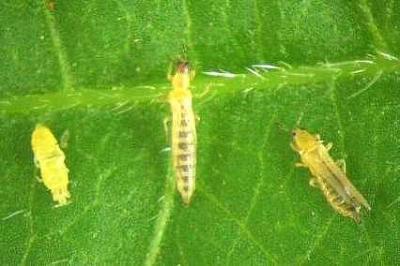
No. Amblyseius cucumeris feed on the larvae and pupae stages of the thrips life cycle and will not control adults. They are best as prevention, so hang them around the time you normally see thrips or at the very first sign. If you already have a thrips problem, you need something that also controls the adult stage.
How long do Amblyseius cucumeris sachets last?
The mites leave the sachet gradually over the next 4 to 6 weeks, so leave it hanging for that long. Be careful not to take it away too soon. It will last longer out of direct sunlight and sheltered from overhead watering.
Where do I hang thrips predator sachets, and do I need to open them?
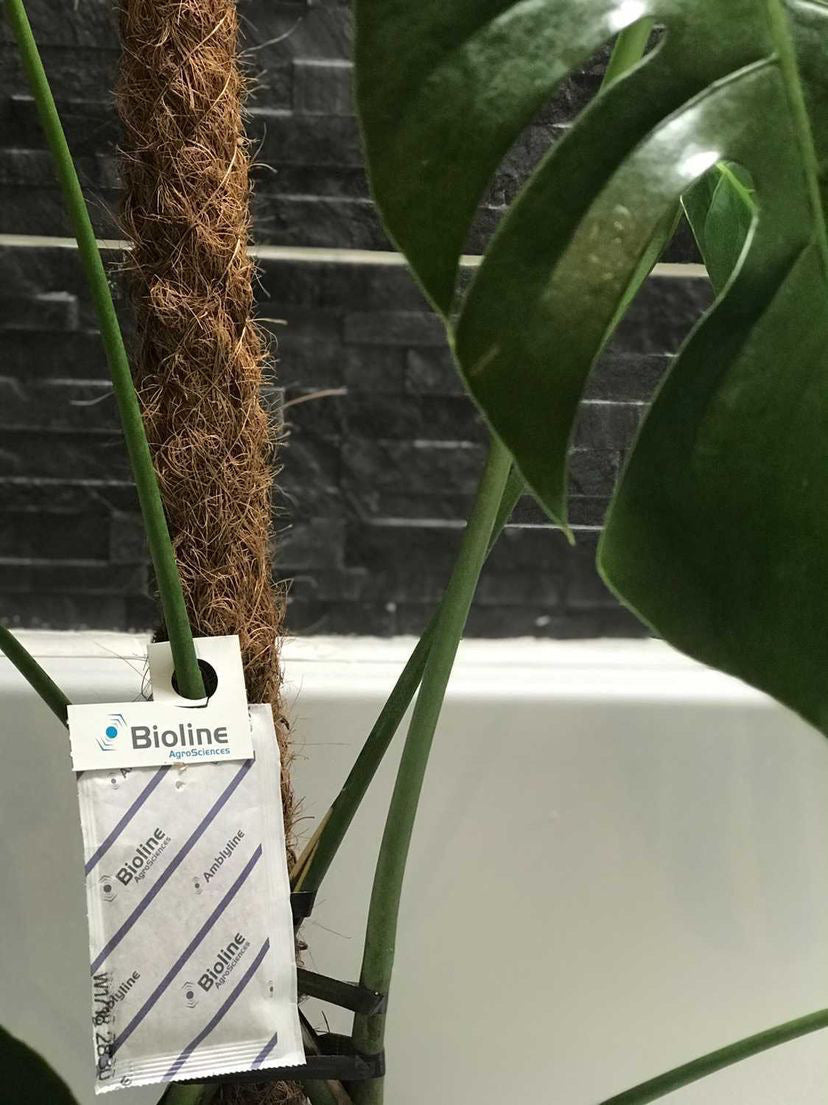
Hang them among the leaves, within crawling distance of the thrips, and do not open them. The mites crawl out of the back through a little round hole, so there is no need to tear the sachet or make a bigger hole. On a small pot plant that cannot support the sachet, prop it up against the base of the plant.
Why can't I see any mites after hanging the sachets?
Because they are very small and may take up to a week to wake up. You may never see them at all, even while they are crawling out of the back of the sachet over the 4 to 6 week release period. Hang the sachets as soon as you can after they arrive. The supplier advises using them straight away, so do not keep them back for later.
Can I use thrips sachets before I see any thrips?
Yes, that is exactly what they are for. Amblyseius can live on flower pollen until the young thrips turn up and give them their preferred food, which helps stop an infestation taking hold. Indoors you can use them all year round. Outdoors, introduce them in mid-May for frost-free glasshouses, or earlier where it is constantly warm.
Can I use predator mites after spraying for thrips?
Not straight away. The supplier says do not introduce live predators within 6 weeks of using a chemical pesticide, and to check the bottle of the chemical you used to see how long it stays active. If you are not sure, ask us before you order.
Description
Slow Release Sachets for Thrips (Amblyseius cucumeris) are small hanging sachets, each holding a breeding colony of predatory mites that crawl out over 4 to 6 weeks and eat thrips larvae and pupae. They are for anyone growing indoors or in a frost-free glasshouse who wants to stop thrips getting a grip, or catch them at the very first sign.
Thrips are a pain to reach with sprays. Amblyseius mites are small enough to get in among the leaves and find them, and they eat what they find. There is a catch, and we would rather you heard it from us first: these mites feed on the larvae and pupae only. They will not control adult thrips.
Read this first: larvae and pupae, not adults
Use these as prevention, either around the time you normally see thrips or at the very first sign that they are about. If you already have a proper thrips problem, have a look at our other thrips products below, because you will need something that also controls the adult stage.
Slow Release Sachets for Thrips (Amblyseius cucumeris) specifications
| Spec | Detail |
|---|---|
| Product | Slow Release Sachets for Thrips (Amblyseius cucumeris) |
| Predator | Amblyseius cucumeris, a predatory mite |
| Format | Slow release sachet with a hanging tab. The mites leave through a little round hole in the back. |
| Targets | Thrips larvae and pupae |
| Does not control | Adult thrips |
| Release period | 4 to 6 weeks |
| Works best at | 20 to 27°C. Some humidity helps them, but it is not essential. |
| Also used for | Tarsonemid mites (begonia growers use them for this) |
| Indoors | All year round, with no risk to pets or humans |
| Outdoors | Introduce in mid-May for frost-free glasshouses, or earlier where temperatures are constantly warm |
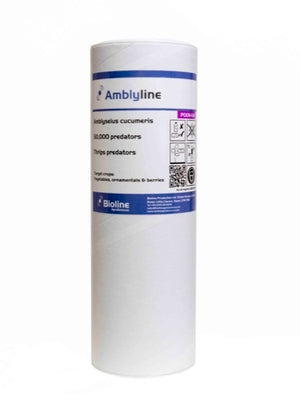
| Pack sizes | 4, 10, 20, 50, 100 or 200 sachets |
In the box
The sachets, in whichever pack size you choose. The sachets are the whole product.
Do not bin a sachet because it looks empty or nothing seems to be happening. The mites crawl out of the back through a little round hole for 4 to 6 weeks, and they are so small you may never see them. Hang it by the tab at the top and leave it alone. There is no need to tear it or make the hole bigger.
How to use Slow Release Sachets for Thrips (Amblyseius cucumeris)
- Hang them as soon as you can. Get the sachets out within reach of the thrips as soon as they arrive. The mites can take up to a week to wake up, so do not worry if you see no predators straight away.
- Hang them among the leaves. The mites have to be within crawling distance of their prey, so put the sachet in amongst the foliage, not off to one side.
- Prop it up if the plant is too small. On a young pot plant that cannot hold the sachet, stand it up against the base of the plant instead.
- Leave the sachet intact. The mites walk out of the round hole in the back, so no extra tearing or hole-making is needed.
- Keep it out of direct sunlight and sheltered from overhead watering. It lasts longer that way.
- Leave it in place for 4 to 6 weeks. The mites leave gradually over that time, so be careful not to take the sachet away too soon.
How many? The supplier's guide is 1 sachet for every 1 to 2 square metres, or 1 per plant. That is their rule of thumb, not a guarantee, so go towards the higher number if you are worried.
Good to know
- Temperature: they work best between 20 and 27°C.
- Humidity: some humidity helps them, but they do not need it to work.
- They can live on pollen: Amblyseius will survive on pollen from flowers until the young thrips start to appear. Young thrips are their preferred food, so this helps stop an infestation taking hold.
- Food in the sachet: the supplier says each sachet also contains grain mites, which are food for the predators so they do not all come out at once.
- After a spray: the supplier says do not introduce live predators within 6 weeks of using a chemical pesticide. Check the bottle to see how long yours stays active.
- No thrips, no mites: the supplier says the mites die out if there are no thrips left for them to eat.
Which pack size of Slow Release Sachets for Thrips (Amblyseius cucumeris)?
Count your plants or measure your growing area, then use the supplier's guide of 1 sachet per plant or per 1 to 2 square metres. Bigger packs cost less per sachet.
| Pack | Price | Per sachet | Supplier's guide |
|---|---|---|---|
| 4 sachets | £5.00 | £1.25 | 4 plants, or 4 to 8 m² |
| 10 sachets | £6.50 | 65p | 10 plants, or 10 to 20 m² |
| 20 sachets | £10.00 | 50p | 20 plants, or 20 to 40 m² |
| 50 sachets | £20.00 | 40p | 50 plants, or 50 to 100 m² |
| 100 sachets | £30.00 | 30p | 100 plants, or 100 to 200 m² |
| 200 sachets | £55.00 | 27.5p | 200 plants, or 200 to 400 m² |
Slow Release Sachets for Thrips (Amblyseius cucumeris) FAQs
Do thrips predator sachets work on adult thrips?
No. Amblyseius cucumeris feed on the larvae and pupae stages of the thrips life cycle and will not control adults. They are best as prevention, so hang them around the time you normally see thrips or at the very first sign. If you already have a thrips problem, you need something that also controls the adult stage.
How long do Amblyseius cucumeris sachets last?
The mites leave the sachet gradually over the next 4 to 6 weeks, so leave it hanging for that long. Be careful not to take it away too soon. It will last longer out of direct sunlight and sheltered from overhead watering.
Where do I hang thrips predator sachets, and do I need to open them?
Hang them among the leaves, within crawling distance of the thrips, and do not open them. The mites crawl out of the back through a little round hole, so there is no need to tear the sachet or make a bigger hole. On a small pot plant that cannot support the sachet, prop it up against the base of the plant.
Why can't I see any mites after hanging the sachets?
Because they are very small and may take up to a week to wake up. You may never see them at all, even while they are crawling out of the back of the sachet over the 4 to 6 week release period. Hang the sachets as soon as you can after they arrive. The supplier advises using them straight away, so do not keep them back for later.
Can I use thrips sachets before I see any thrips?
Yes, that is exactly what they are for. Amblyseius can live on flower pollen until the young thrips turn up and give them their preferred food, which helps stop an infestation taking hold. Indoors you can use them all year round. Outdoors, introduce them in mid-May for frost-free glasshouses, or earlier where it is constantly warm.
Can I use predator mites after spraying for thrips?
Not straight away. The supplier says do not introduce live predators within 6 weeks of using a chemical pesticide, and to check the bottle of the chemical you used to see how long it stays active. If you are not sure, ask us before you order.
Want something different for thrips? Have a look at the Thrip Control collection.


