The Hydro Bros Growing Advice
Spider Mites: How To Identify Them, Treat Them And Stop Them Coming Back
Spider mites are one of those pests that can look like nothing for a while, then suddenly they're everywhere. If you're already seeing webbing, you're not dealing with the start of the problem.
The good news is they're manageable. The important bit is working out how far they've got, treating the whole life cycle rather than whatever you can see today, and not throwing sprays and predators at the plants at the same time.
Check the undersides of the leaves with a loupe. If you've caught them early, predatory mites can be a very good option. If you've got a proper established infestation, knock the population back first, clean up badly affected material, then move to biological control once whatever you've used is compatible with releasing predators.
First, Make Sure They're Actually Spider Mites
Don't start spraying because you've found a damaged leaf. Get a loupe out and look underneath it.
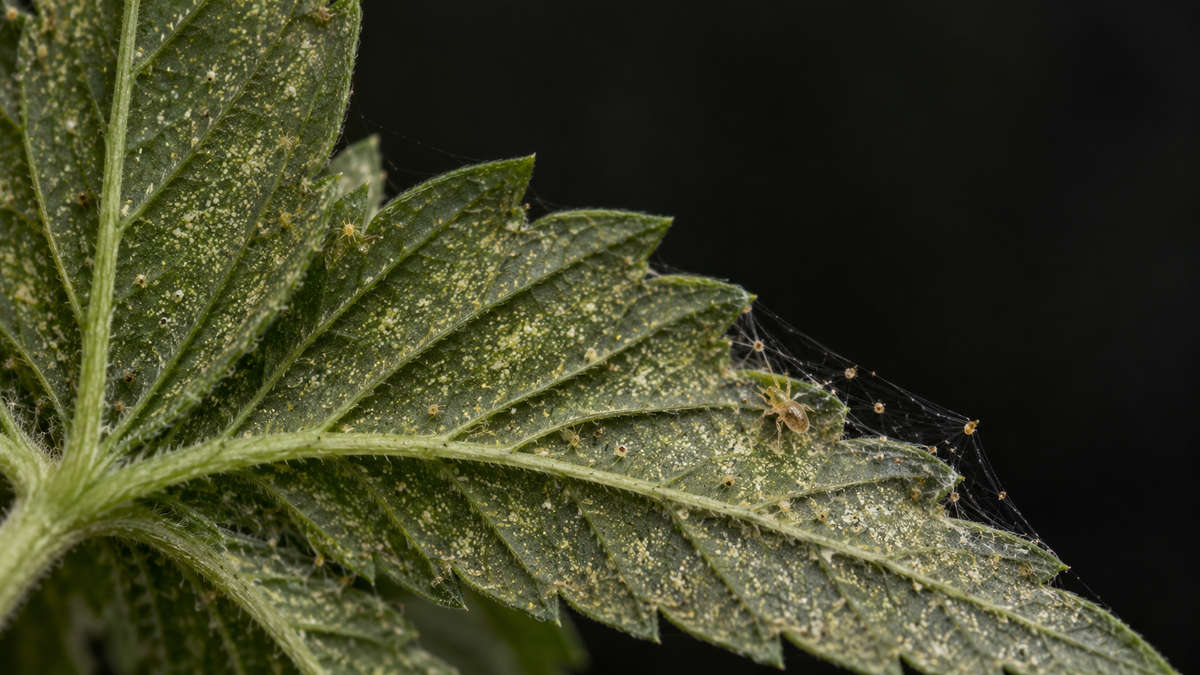
The first thing you'll often notice is pale stippling or mottling on the top of the leaf. Flip it over and you may see tiny mites moving around the veins, small round eggs and pale shed skins. Once the population gets heavier, you'll start seeing the fine webbing they're famous for.
If there's webbing running between leaves and stems, the infestation is already established. Deal with it now rather than waiting to see what happens.
Pale speckling on the leaf surface, mites and eggs underneath the leaf, shed skins, weakening foliage and fine webbing as the infestation gets heavier.
How Bad Is It?
This matters because the answer isn't automatically "spray everything".
| What you're seeing | What I'd be thinking |
|---|---|
| A few mites, little or no webbing | You've caught it early. Biological control is worth considering straight away. |
| Several affected leaves and obvious feeding damage | Remove the worst material, monitor closely and decide whether you need to knock the population down before predators go in. |
| Heavy webbing and mites across multiple plants | This is established. Physically remove badly affected material and get the population under control before expecting predators to clean up the rest. |
Predatory mites aren't just a last step after spraying. If you've found the problem early enough, they can be the treatment. That's one of the biggest things I'd change from the way people normally approach spider mites.

Why One Treatment So Often Fails
Spider mites don't all exist at the same stage at the same time. You've got eggs, immature mites and adults on the plant together. That is why somebody can spray, think they've smashed them, then find mites again a few days later.
A contact treatment is only useful if it reaches the pest and is used exactly as its label tells you. Coverage matters, especially underneath the leaves where spider mites spend most of their time.
So don't think of one application as the finish line. Think about the population that's there now and what is going to emerge afterwards.
Treat the cycle, not just the mites you can see today.
How I'd Approach Treatment
There isn't one universal spider mite schedule I'd give everybody. How far the infestation has gone, what you've already sprayed, the crop, the environment and whether you want to introduce predators all change the answer.
1. Isolate the problem if you can
If one plant is affected, don't drag it through the rest of the room. Keep infested material away from clean plants and deal with the worst leaves carefully.
2. Remove heavily webbed material
Bag it before carrying it out. You're reducing the population before you've even opened a bottle.
3. If you're using a contact treatment, coverage is everything
The undersides of the leaves matter. Follow the product label for dilution, application interval, crop suitability and any restrictions. More product isn't automatically more effective.
4. Don't mix a spray programme and live predators blindly
Predatory mites are living organisms. A product that controls spider mites may also affect the predators you're about to release. Check the compatibility and residual period for the exact treatment you've used before introducing beneficials.


Where Predatory Mites Fit In
Phytoseiulus persimilis is a specialist predator used against two-spotted spider mite and feeds across the pest's life stages. If you catch the infestation early, this is exactly the sort of situation where biological control can make a lot of sense.
Where people come unstuck is releasing predators into a heavily webbed infestation and expecting a small predator population to reverse it overnight, or releasing them straight after using something that isn't compatible with them.
Get the timing right. If you've already treated the plants, check the product guidance before releasing predators. Once beneficials are working, don't keep reaching for another spray without checking what it'll do to them.
Temperature Changes The Speed Of The Problem
Spider mites generally develop faster in warmer conditions. That's why a problem can seem to accelerate so quickly in a hot grow room.
It also means I wouldn't blindly copy a fixed "spray every three days" schedule from somebody else's room. Follow the label of the treatment you're actually using and keep checking the plants. Your job is to monitor whether the population is falling, not just tick days off a calendar.
A cheap loupe is more useful here than guessing. Check the same marked leaves every couple of days and look at the new growth as well.
A Practical Example
You've found a moderate infestation with some visible webbing.
First: isolate affected plants where practical and bag up the worst webbed material.
Next: inspect the rest of the room properly. Check leaf undersides, not just plants that already look damaged.
If treatment is needed: choose a product suitable for the crop and situation and follow its label. Get proper coverage rather than soaking the easy-to-reach top of the canopy.
Then: keep monitoring. Don't assume the problem has gone because you can't see adults the next morning.
If moving to predators: check compatibility with anything already applied, wait for the required residual period, then release the beneficials according to their instructions.
Afterwards: keep checking twice a week. Clean new growth and a falling mite population are what you're looking for.
Clean The Room As Well As The Plants
If you've had a proper infestation, don't only think about the leaves. Remove dead plant material, clean the growing area and deal with weeds or spare plants nearby that could keep a population going.
Be sensible about moving between rooms too. If you've just been handling an infested plant, don't immediately start brushing against every clean plant you've got.
At the end of a run, an empty room is your chance to clean properly. It's a much easier job with no plants, pots or irrigation lines in the way.
How To Stop Spider Mites Coming Back
Prevention is mostly boring stuff done consistently, which is probably why it gets ignored.
Inspect new plants and cuttings. Don't assume something is clean because it came from somebody you trust.
Quarantine where practical. A few days of observation is much easier than treating the whole room later.
Use a loupe. You want to find mites before the webbing tells you they're there.
Keep the room clean. Dead leaves, weeds and neglected plants give pests somewhere else to sit.
Watch hot, dry conditions. Spider mite populations can build quickly when conditions suit them. Don't try to wreck the crop's environment just to fight mites, but understand that a hot room can make the problem move faster.
Consider preventative biological control if you've got history. If mites are a recurring problem, a planned IPM programme makes more sense than waiting for another outbreak and panicking.

We also stock Athena IPW, SB Invigorator and other options in our Spider Mite Control collection. Which one makes sense depends on what you're growing, the stage it's at and whether beneficial insects or mites are already in the room.
Spider Mite FAQs
What do spider mites look like?
They're tiny and easy to miss without magnification. Look underneath the leaves for small moving mites, round eggs and pale shed skins. Two-spotted spider mites commonly show darker patches on the body.
What are the first signs of spider mites?
Pale stippling or mottling on the leaves is often the first obvious plant symptom. Fine webbing normally appears once the infestation is more established.
Can I get rid of spider mites with one spray?
Don't count on one application solving an established infestation. Different life stages can be present together and contact products depend on coverage. Follow the label and keep monitoring after treatment.
Do predatory mites kill spider mites?
Yes. Phytoseiulus persimilis is widely used as a biological control for two-spotted spider mite and feeds on the pest across its life stages.
Can I use predatory mites after spraying?
Potentially, but don't guess the waiting period. Check compatibility and residual information for the exact product you've used before releasing beneficials.
Why do spider mites keep coming back?
Common reasons are incomplete coverage, stopping treatment too early, missing mites elsewhere in the room, bringing them back in on new plant material, or treating adults without properly monitoring what emerges afterwards.
Found Spider Mites?
Work out how far they've got before you start throwing products at the problem. Early infestation and heavy webbing aren't the same job.
Spider Mite ControlSpider Mite PredatorsSteve Wong
Co-founder, The Hydro Bros. I spend most days dealing with this stuff in the shop, online and with customers trying to work out what's actually going wrong with their plants. If you're not sure what pest you've got, get a proper look at it before treating anything.