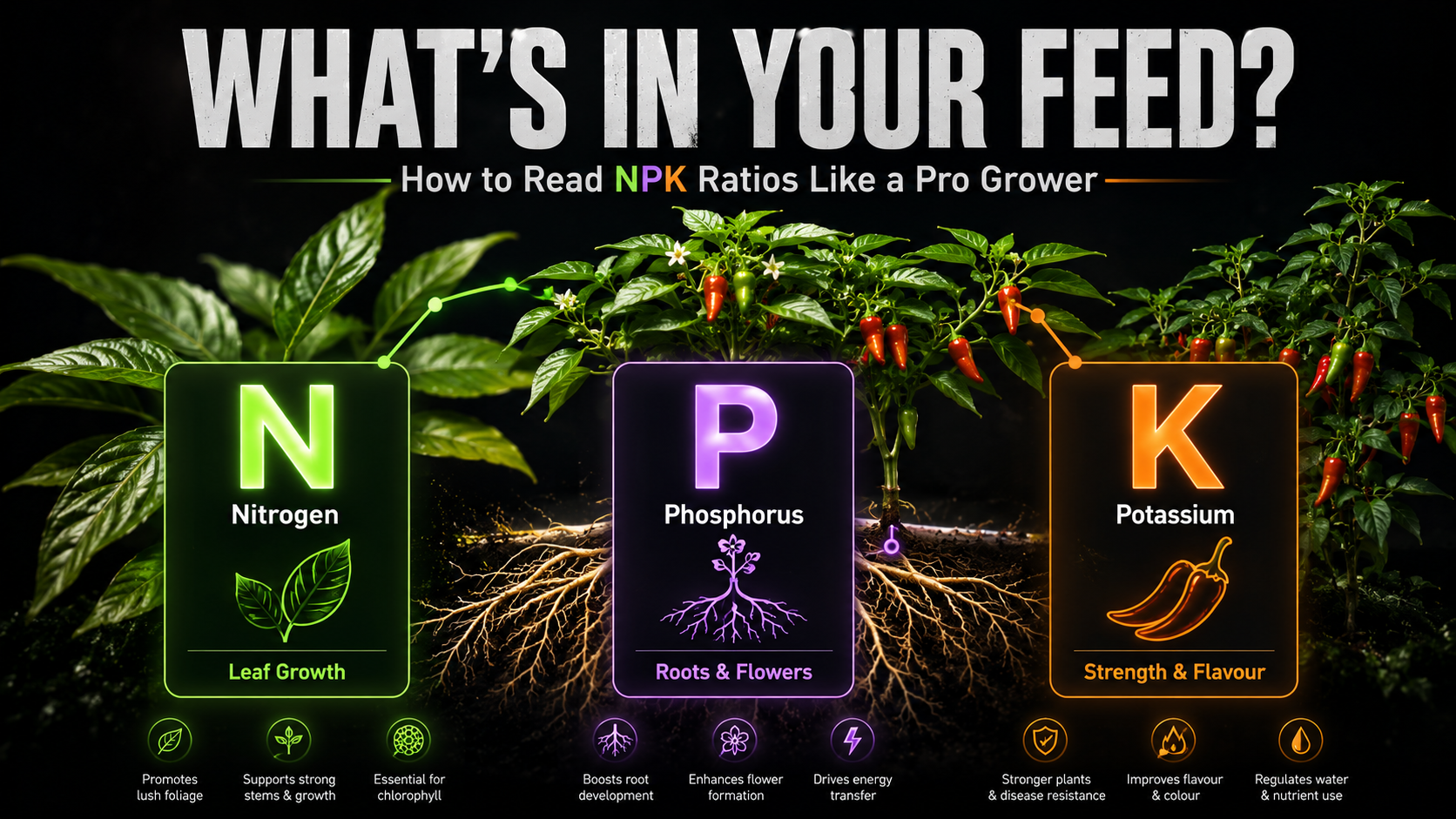
NPK ratios are on the back of every nutrient bottle — and most growers glance at them without really knowing what they mean. Once you get it, though, it changes how you feed. You stop guessing and start making decisions based on what your plants actually need at each stage of their life.
Here's the full breakdown: what each nutrient does, what a deficiency or excess looks like, and how to fix it fast.
Nitrogen is what drives leafy, vigorous growth. It's involved in protein production, enzyme activity, and chlorophyll — basically everything that keeps a plant green and pushing upwards. Get it right during veg and your plants will look healthy, structured and strong.
LOW
Too little
Older leaves go pale and yellow, starting from the bottom up. Stems get thin. Growth slows noticeably. Classic sign: the plant looks washed out.
HIGH
Too much
Leaves go very dark green and get brittle. Stems weaken. The plant keeps throwing out foliage instead of transitioning to flower — and fruit flavour takes a hit.
FIX
How to fix it
Deficiency: gradually increase feed strength and consider a foliar spray like
Nitrozyme for a quick boost. Excess: flush with pH-balanced water for a few days, then come back in with a lighter feed.
💡 Yellowing leaves late in flower is totally normal — your plant is pulling stored nitrogen into the fruits. Don't panic and don't reach for more feed.
Phosphorus handles the heavy lifting when it comes to root development, flower formation and fruit ripening. It's also involved in energy transfer inside the plant — without enough P, everything slows down. You'll typically push more of it during the transition to flower and peak bloom.
LOW
Too little
Slow overall growth. Leaves turn dark green or take on a purplish tint — especially on the underside of older leaves. Flowering is delayed or underwhelming.
HIGH
Too much
Excess P locks out iron, zinc and magnesium — so you end up with secondary deficiencies that can look confusing. If you're seeing strange symptoms and your P has been high, that's likely the culprit.
FIX
How to fix it
Flush with pH-adjusted water, then reintroduce a PK booster like
Shogun PK Warrior at a reduced base nutrient dose. Soil or coco growers can also try
Bat Guano for a natural slow-release top-up.
💡 Cold grow room? Low temps can mimic a phosphorus deficiency — check your environment before adjusting your feed.
Potassium is what separates a good finish from a great one. It strengthens cell walls, regulates water movement inside the plant, and has a direct impact on flavour, colour and how well your plants fight off pests and disease. Most growers increase K during late flower for this reason.
LOW
Too little
Yellow or brown edges on leaves, weak roots, curling or twisted leaves. Plants start looking stressed and become more vulnerable to pests.
HIGH
Too much
High K blocks calcium, magnesium and nitrogen uptake. You'll see brown spotting, crinkled leaves and stunted growth — often confused with other deficiencies.
Plants are always communicating — yellow leaves, purple stems, burnt tips, twisted growth. Once you learn to read those signs, you'll catch problems early and fix them fast instead of spending weeks guessing what went wrong.
Quick reference
N
Leafy growth & green colour. Push hard in veg, ease off in flower.
P
Roots, flowers & fruiting. Ramp up at flower transition.
K
Strength, flavour & resilience. Peak importance in late flower.
Ready to dial in your feed? Browse our full range of nutrients and boosters.
Shop Nutrients